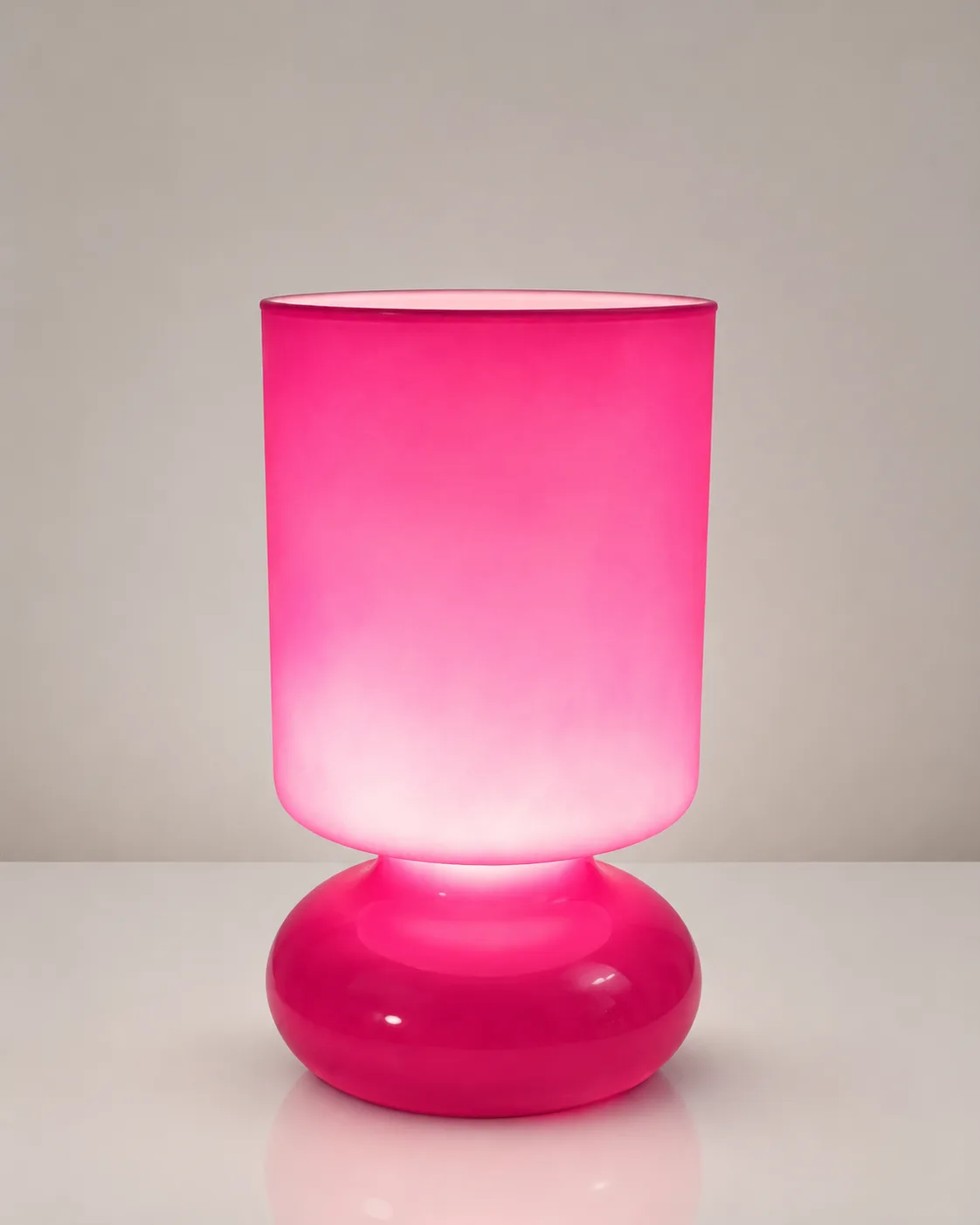
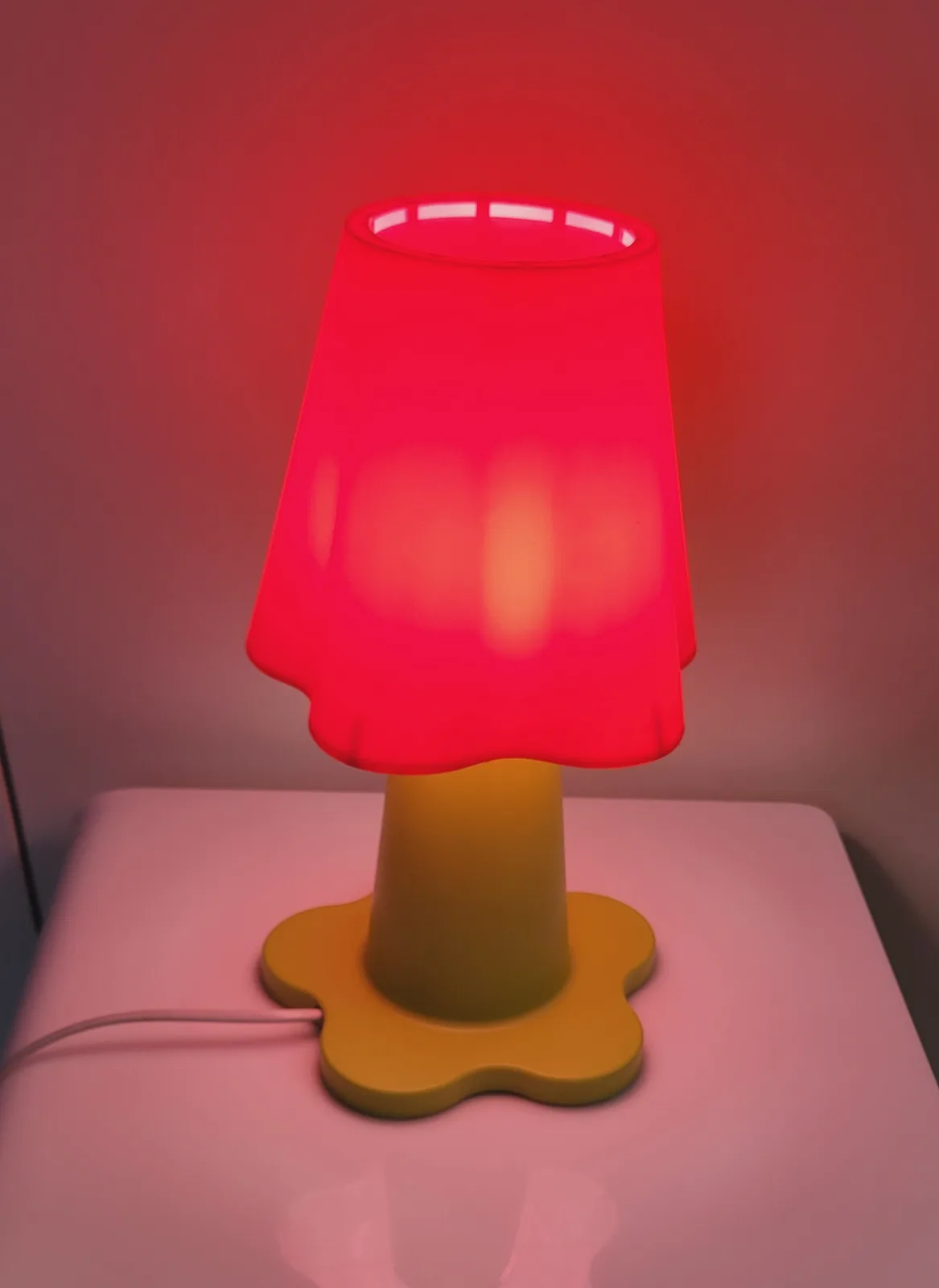
Pop
Pop at IKEA is not the same subject as Space Age, even though the dates overlap. Space Age is about material: plastic, moulded volumes, futurism. Pop is about surface: pattern, colour, graphics printed on every available textile. More often than not, Pop was applied to a Scandinavian-modern carcass: a beechwood frame upholstered in oversized daisy prints; a sofa of innocent proportions wrapped in an orange-and-brown explosion of geometry.
The signature pop piece at IKEA was Gillis Lundgren’s TAJT lounge chair from 1972, made of thick blue denim. A photograph of it took the cover of the 1973 catalogue before anyone had really thought of jeans as an upholstery fabric. Next to TAJT sat KONTIKI, a lounger that referenced traditional Swedish beach chairs but came clad in psychedelic floral prints. The textiles IKEA bought by the thousand metres from Sven Fristedt (his BLÅDHULT pattern from 1979 still resurfaces) and dozens of close cousins.
Pop was also a catalogue aesthetic: flat, oversized photo compositions, Cooper Black-style display type, family scenes in yellow kitchens with op-art posters on the wall. What remains in our parents’ homes from this period is mostly the textiles and lamps. Volumes followed fashion, but printed patterns survived in wardrobes, cushion linings and curtains until being thrown out in the 1990s.